

What are the wind resistance standards for a steel warehouse?
Dec 05, 2025
What are the wind resistance standards for a steel warehouse?
As a supplier of steel warehouses, I've encountered numerous inquiries regarding wind resistance standards. These standards are not just arbitrary numbers; they are the result of extensive research, engineering expertise, and a deep understanding of environmental factors. In this blog, I'll delve into the essential aspects of wind resistance standards for steel warehouses, providing you with valuable insights to make informed decisions.
Understanding Wind Loads
Before we discuss the standards, it's crucial to understand what wind loads are. Wind loads refer to the forces exerted by the wind on a structure. These forces can be classified into two main types: static and dynamic. Static wind loads are the steady forces that push or pull on the structure, while dynamic wind loads are the fluctuating forces caused by gusts and turbulence.
The magnitude of wind loads depends on several factors, including the wind speed, the shape and size of the structure, and the terrain around the building site. For instance, a steel warehouse located in an open plain will experience different wind loads compared to one situated in a densely built - up area.
International and Local Standards
There are several international and local standards that govern the wind resistance of steel warehouses. One of the most widely recognized international standards is the ISO 4354:2009, which provides guidelines for determining wind actions on structures. This standard takes into account various factors such as basic wind speed, terrain roughness, and the shape of the structure to calculate the wind loads.
In the United States, the American Society of Civil Engineers (ASCE) publishes the ASCE 7 - 16 standard, which is used for the design of buildings and other structures. This standard provides detailed procedures for determining wind loads based on different regions and building types. For example, it classifies different wind zones across the country, with each zone having specific wind speed requirements.
Local building codes also play a significant role in determining wind resistance standards. These codes are often based on the specific environmental conditions and historical wind data of a particular area. For instance, coastal areas may have more stringent wind resistance requirements due to the higher likelihood of hurricanes and strong winds.
Design Considerations for Wind Resistance
When designing a steel warehouse to meet wind resistance standards, several key factors need to be taken into account.
Structural Design: The structural design of the steel warehouse is crucial. A well - designed steel frame can distribute wind loads evenly throughout the structure, reducing the risk of structural failure. For example, using a rigid frame design can enhance the overall stability of the warehouse. The columns, beams, and trusses should be sized and configured to withstand the expected wind loads.
Roof Design: The roof is one of the most vulnerable parts of a steel warehouse when it comes to wind loads. A pitched roof can help to deflect wind more effectively than a flat roof. Additionally, proper roof bracing and connections are essential to prevent the roof from being lifted off by strong winds. Using high - strength fasteners and steel plates to secure the roof to the frame can significantly improve wind resistance.
Wall Design: The walls of the steel warehouse also need to be designed to resist wind loads. Shear walls can be incorporated into the design to provide lateral stability. These walls are typically made of steel panels or concrete and are designed to transfer wind forces to the foundation.
Foundation Design: A strong and stable foundation is essential for a steel warehouse to resist wind loads. The foundation should be designed to anchor the structure firmly to the ground, preventing it from being toppled by strong winds. The type of foundation used, such as a shallow foundation or a deep foundation, will depend on the soil conditions and the expected wind loads.
Testing and Certification
To ensure that a steel warehouse meets the wind resistance standards, it is often necessary to conduct testing and obtain certification. Wind tunnel testing is a common method used to simulate different wind conditions and measure the performance of the structure. During wind tunnel testing, a scale model of the steel warehouse is placed in a wind tunnel, and the wind forces acting on the model are measured. This data can then be used to validate the design and make any necessary adjustments.
Certification from a recognized third - party organization is also important. This certification provides assurance to the customers that the steel warehouse has been designed and constructed to meet the relevant wind resistance standards. For example, a certification from an organization like Underwriters Laboratories (UL) can be a valuable indication of the quality and safety of the steel warehouse.
Importance of Meeting Wind Resistance Standards
Meeting wind resistance standards is not only a legal requirement but also crucial for the safety and longevity of a steel warehouse. A steel warehouse that does not meet the wind resistance standards is at a higher risk of structural damage during strong wind events. This can lead to costly repairs, downtime, and even endanger the lives of the people working in or around the warehouse.
Moreover, insurance companies often require steel warehouses to meet certain wind resistance standards. By ensuring that your steel warehouse meets these standards, you can potentially reduce your insurance premiums and avoid any issues with insurance claims in the event of a wind - related disaster.
Our Offerings as a Steel Warehouse Supplier
As a supplier of steel warehouses, we are committed to providing high - quality products that meet the highest wind resistance standards. Our team of experienced engineers uses the latest design software and industry best practices to design steel warehouses that can withstand the most challenging wind conditions.
We offer a wide range of Metal Warehouse Buildings that are customizable to meet your specific needs. Whether you need a small storage shed or a large - scale industrial warehouse, we can design and build a solution that is both functional and wind - resistant.

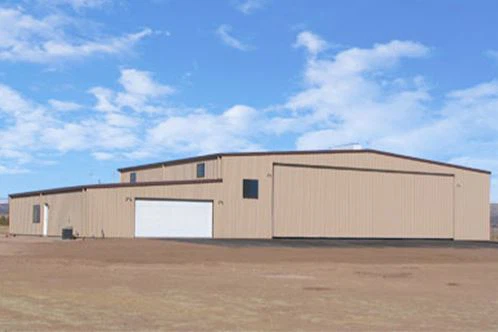
If you are interested in Build A Steel Shed, our experts can guide you through the entire process, from design to construction. We ensure that every step of the process adheres to the relevant wind resistance standards.
For those looking for Steel Frame Warehouse Construction, we have the expertise and resources to deliver a high - quality project. Our construction team is trained to follow the best practices in the industry, ensuring that your steel warehouse is built to last.
If you are considering purchasing a steel warehouse, we encourage you to get in touch with us. Our sales team is ready to answer all your questions and provide you with a detailed quote. We believe that by working together, we can design and build a steel warehouse that meets your requirements and provides you with peace of mind knowing that it is wind - resistant.
References
- ISO 4354:2009, “Wind actions on structures.”
- ASCE 7 - 16, “Minimum Design Loads and Associated Criteria for Buildings and Other Structures.”
- Various local building codes and regulations.